The plate
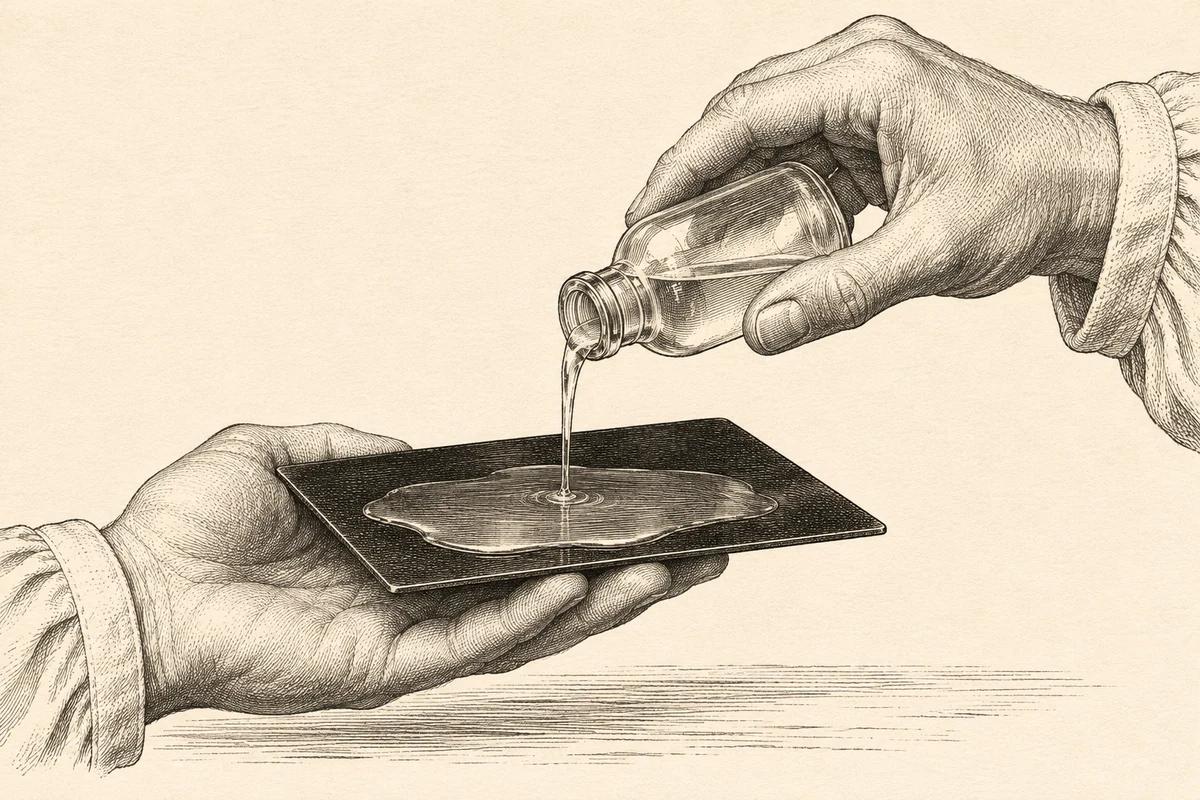
I pour collodion onto a black metal plate and gently tilt it to coat the surface. This thin layer will hold the photograph.
The wet-plate collodion process
The wet-plate collodion process dates back to the 1850s, and I still make each tintype using the same hands-on techniques. You get to watch the whole process from start to finish. Each plate is a one-of-a-kind original.
I pour collodion onto a black metal plate and gently tilt it to coat the surface. This thin layer will hold the photograph.
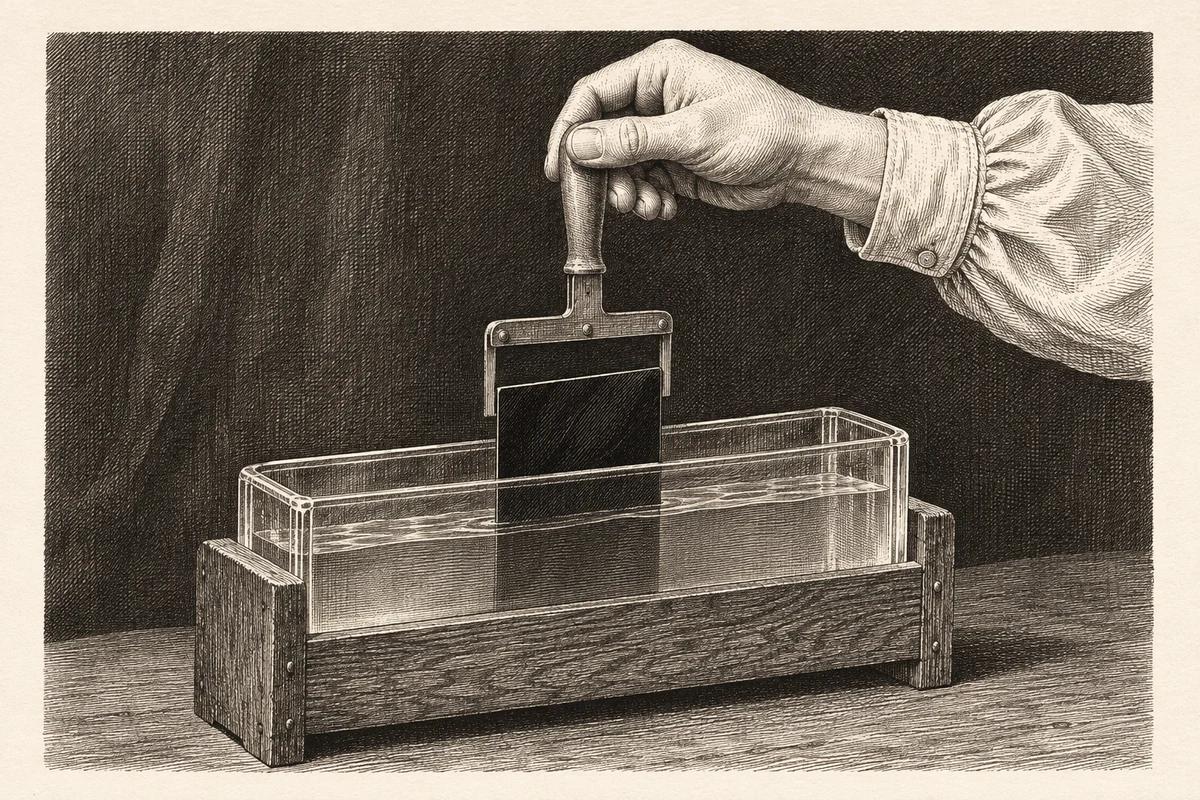
The coated plate goes into a silver nitrate bath, making it sensitive to light. In the darkroom, I place it in a light-tight holder and bring it to the camera while it is still wet.
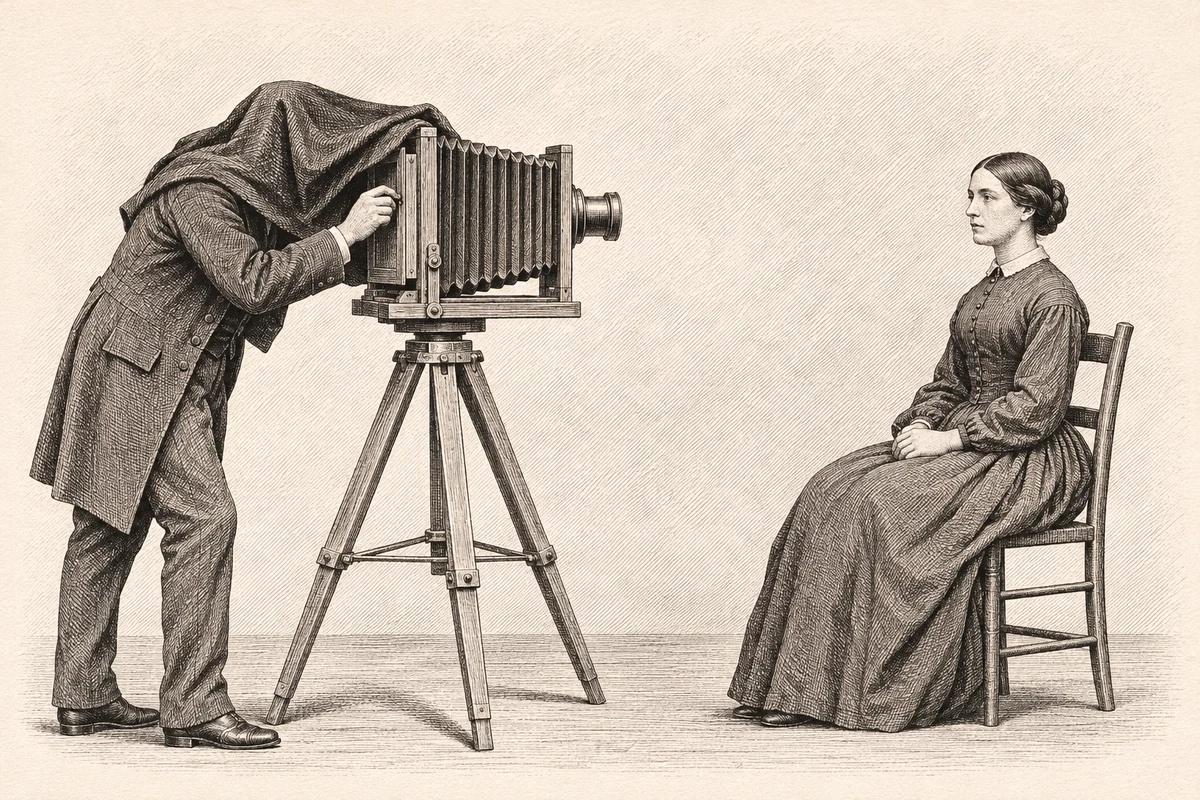
We work out the pose together, and I focus the camera before making the exposure. The portrait is recorded directly on the plate inside the camera.
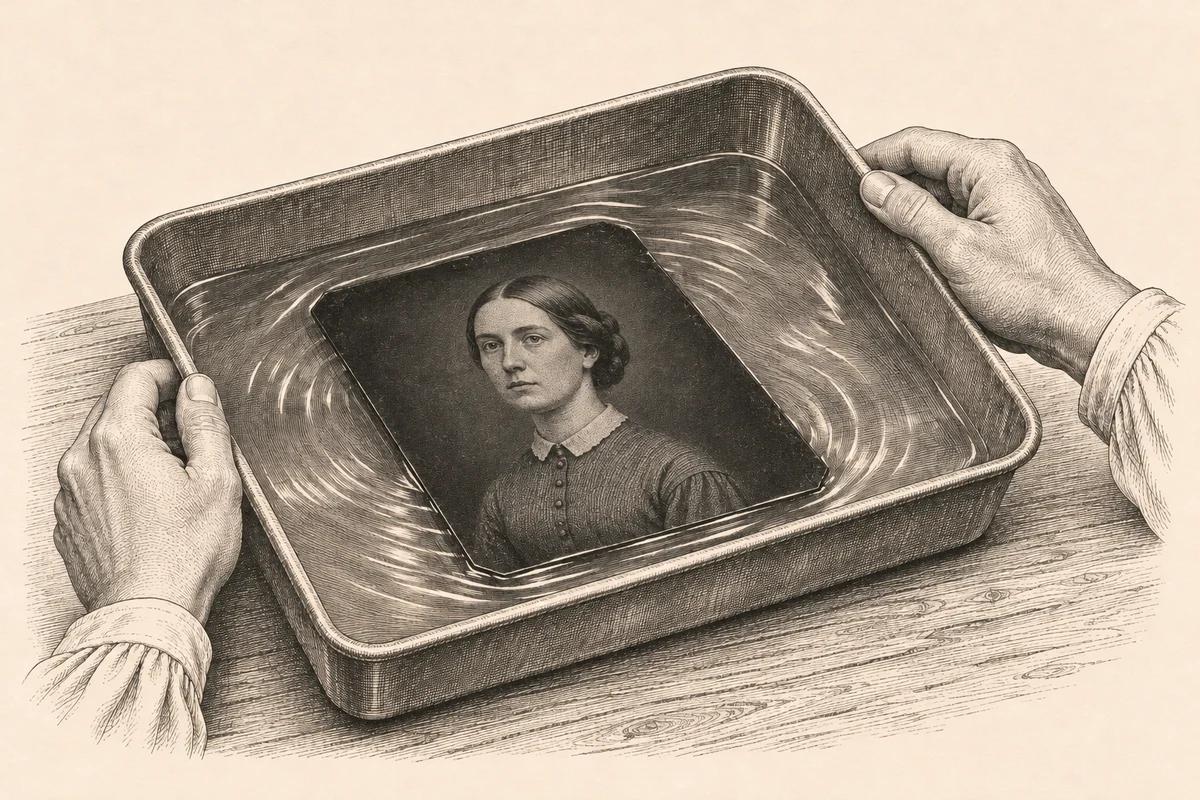
I develop the plate, then place it in the fixer so you can watch your portrait become clear. The photograph is then washed, dried, and finished.